
Why Your Beautiful New Website Isn't Ranking On Google SA

It's a Monday morning in Green Point. A brand strategist opens her laptop, searches her own business name on Google, and finds her site on page one. She smiles, until she searches the phrase her clients actually use to find her. Page four. Then she tries a broader term. Not there at all. The site she's been proud of for six months is, by every measure that matters to Google, invisible.
This is not an unusual story. A Cape Town interior designer spends R35,000 on a new website. It looks exceptional. Her designer sends over screenshots, her friends share it on Instagram, and she sets up Google Analytics in anticipation. Three months later, her organic traffic reads zero. She assumes Google just hasn't found her yet. It has. It just has no reason to rank her.
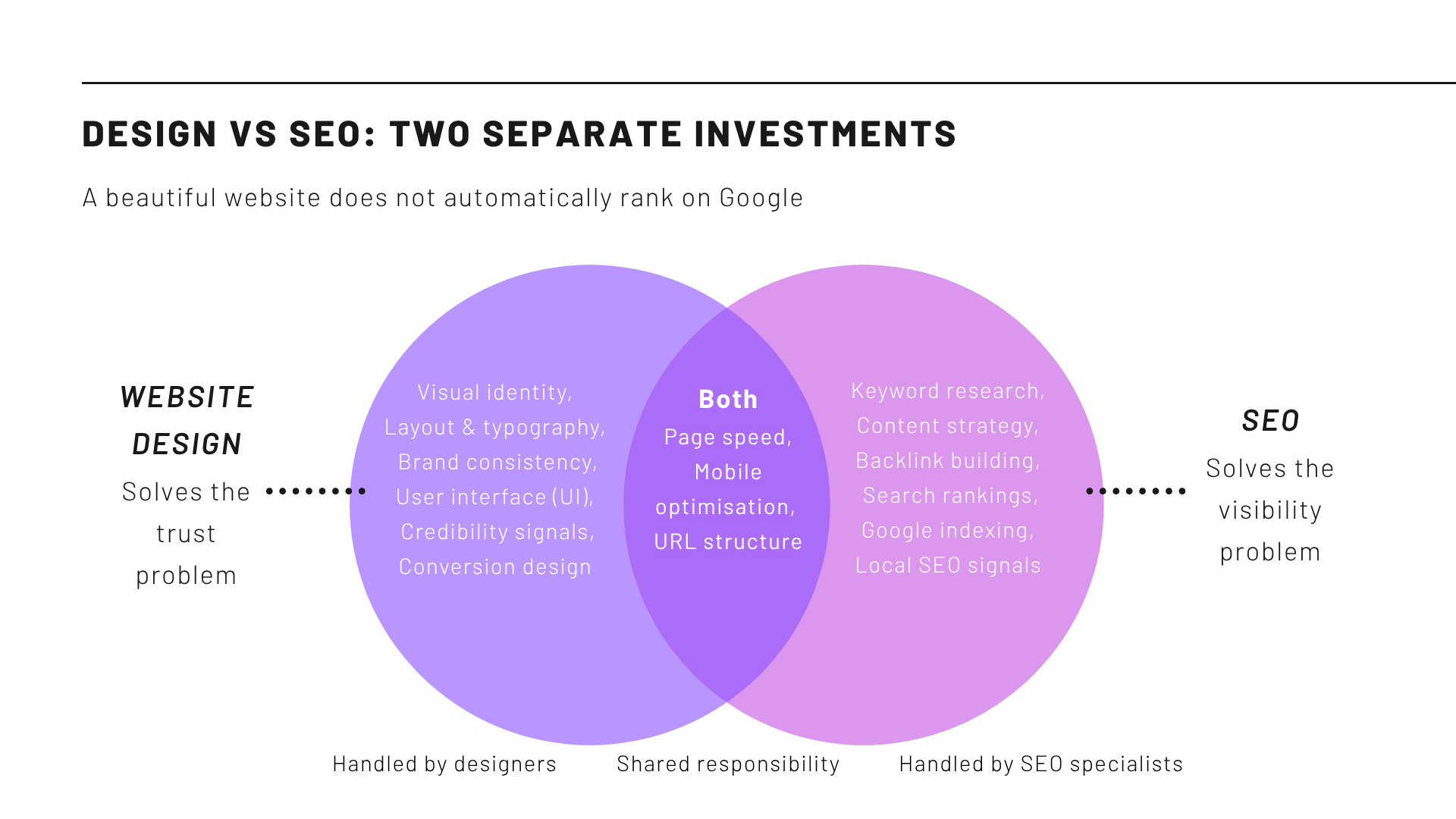
The uncomfortable truth that most web designers don't volunteer, and most clients don't know to ask about, is that design and search visibility are two entirely separate disciplines. A beautiful website solves a trust problem. It tells visitors, once they arrive, that you're credible, polished, and worth their time. But it does nothing to solve the visibility problem, the one that determines whether those visitors ever find you in the first place. If you've been wondering why your new website isn't ranking on Google in South Africa, the answer is almost never the design. It's everything that sits beneath it.
The Myth That a New Website Automatically Ranks
Google processes billions of searches daily, using hundreds of signals to decide which pages deserve to appear for any given query. A new domain with no content strategy, no inbound links, no structured metadata, and no local signals gives Google very little to work with.
Industry data consistently indicates that even well-optimised new websites take three to six months to gain meaningful organic traction. Without SEO, that timeline extends indefinitely. The site exists in Google's index, it's been found, but found isn't the same as ranked. Google has seen it, assessed it, and quietly decided it doesn't deserve to appear above the dozens of competitors who have been building authority for years.
This is the gap between expectation and reality that costs Cape Town business owners thousands of rands every year.
What Google Is Actually Looking For
Understanding why your website isn't showing on Google in Cape Town starts with understanding what Google is trying to do. Its job is to return the most relevant, trustworthy, and useful result for any given search. To assess that, it looks at a combination of factors, and a new website, however beautiful, typically scores poorly on most of them.
The signals that matter most:
- Keyword relevance: does your content actually use the words and phrases your potential customers are searching for?
- Content depth: is there enough substantive information on your pages for Google to understand what you do and who you serve?
- Technical structure: are your meta titles, meta descriptions, header tags, and URL structures set up correctly?
- Page speed: does your site load fast enough to meet Google's performance thresholds, particularly on mobile?
- Backlinks: do other credible websites link to yours, signalling that you're a trusted source?
- Local signals: for businesses targeting a specific city or region, does your site clearly indicate where you operate?
A web designer's brief typically covers none of these beyond the technical structure, and even then, only partially. Unless SEO was explicitly scoped and priced into your project, it almost certainly wasn't included.
Reason 1: Your Site Has No Keyword Strategy
Most small business websites are written the way the owner thinks about their business, not the way their customers search for it. An interior designer might write "curated spatial experiences for discerning clients." Her potential customers are typing "interior designer Cape Town" or "home renovation ideas Constantia."
The gap between how you describe yourself and how people search for you is where most new website SEO problems in the Western Cape begin. Without keyword research informing your page titles, headings, body copy, and metadata, your site is speaking a language Google's algorithm can't translate into relevant search results.
This isn't about stuffing keywords into your content unnaturally. It's about understanding the actual language of demand in your market and building your content around it.
Reason 2: Your Content Is Too Thin
A services page with four sentences. An about page that describes your passion for your craft. A homepage with a hero image, a tagline, and three icons. This is the content structure of the majority of new small business websites, and it gives Google almost nothing to rank.
Google rewards depth. Not word count for its own sake, but genuine informational substance, pages that actually answer the questions people are asking. A physiotherapy practice that publishes a detailed guide to lower back pain in Cape Town office workers will consistently outrank a competitor with a one-paragraph services page, all else being equal.
Content strategy is not a luxury add-on. For any business relying on organic search, it is the primary lever.
Reason 3: Your Page Speed Is Undermining Your Rankings
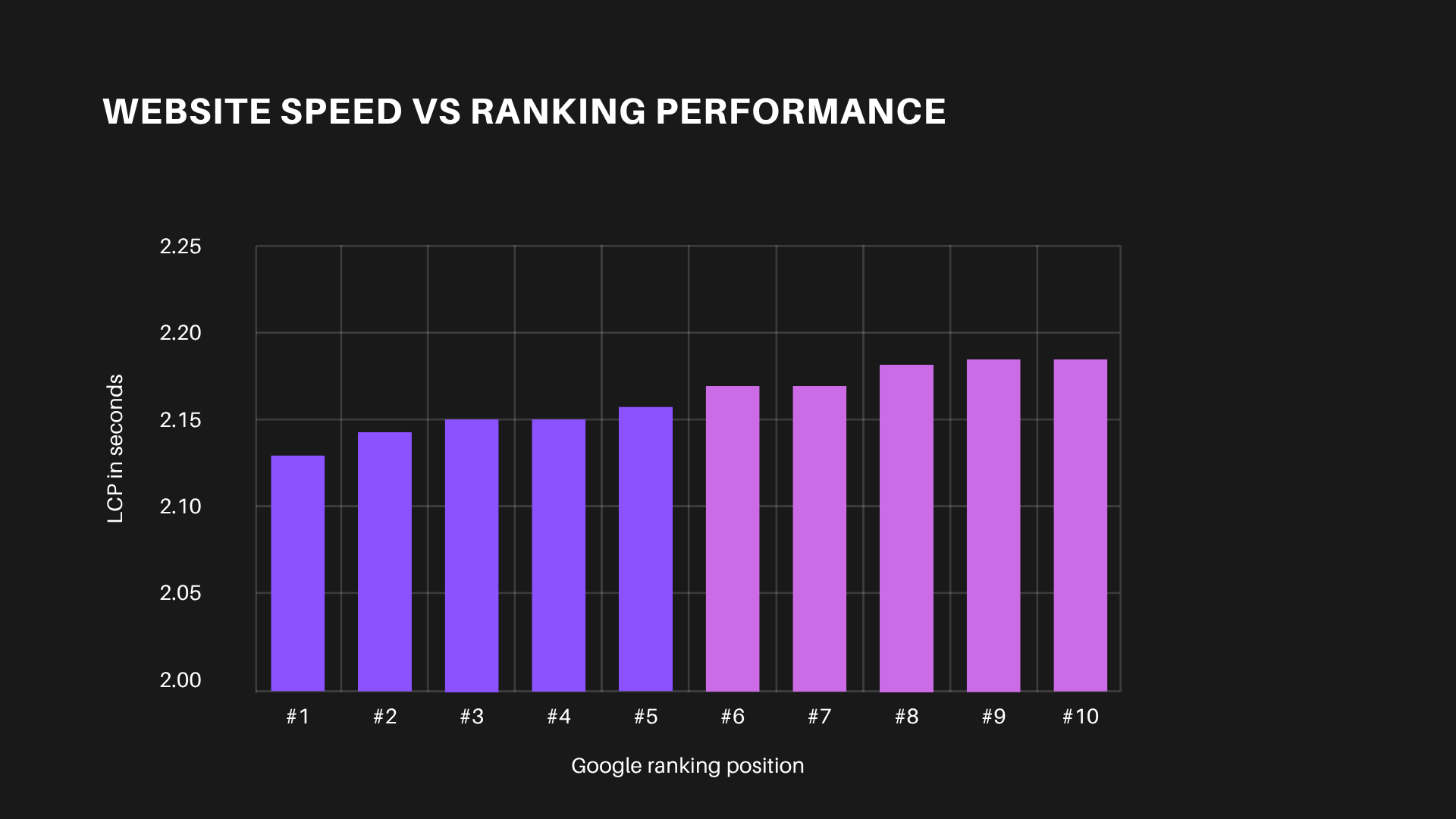
Page speed is a confirmed Google ranking factor, particularly for mobile search. In South Africa, where a significant portion of internet traffic comes from mobile devices on variable network connections, this matters more than the global average.
A site that takes seven seconds to load on a Cape Town LTE connection is being penalised in two ways simultaneously, by Google's algorithm, which deprioritises slow pages, and by users who leave before it finishes loading, which signals to Google that the page wasn't worth visiting.
If your site was built with a bloated page builder, large uncompressed images, or overseas hosting, speed is almost certainly part of your ranking problem. Understanding the common speed issues affecting South African websites is a useful starting point for diagnosing where the drag is coming from.
Reason 4: You Have No Backlinks
A backlink is a link from another website to yours. Google treats these as votes of confidence, signals that other credible sources consider your site worth referencing. A brand new website has none.
This is one of the hardest aspects of SEO to shortcut. Backlinks take time to earn, and the quality of the linking site matters as much as the number of links. A single mention from a respected South African industry publication is worth more than fifty links from low-quality directories.
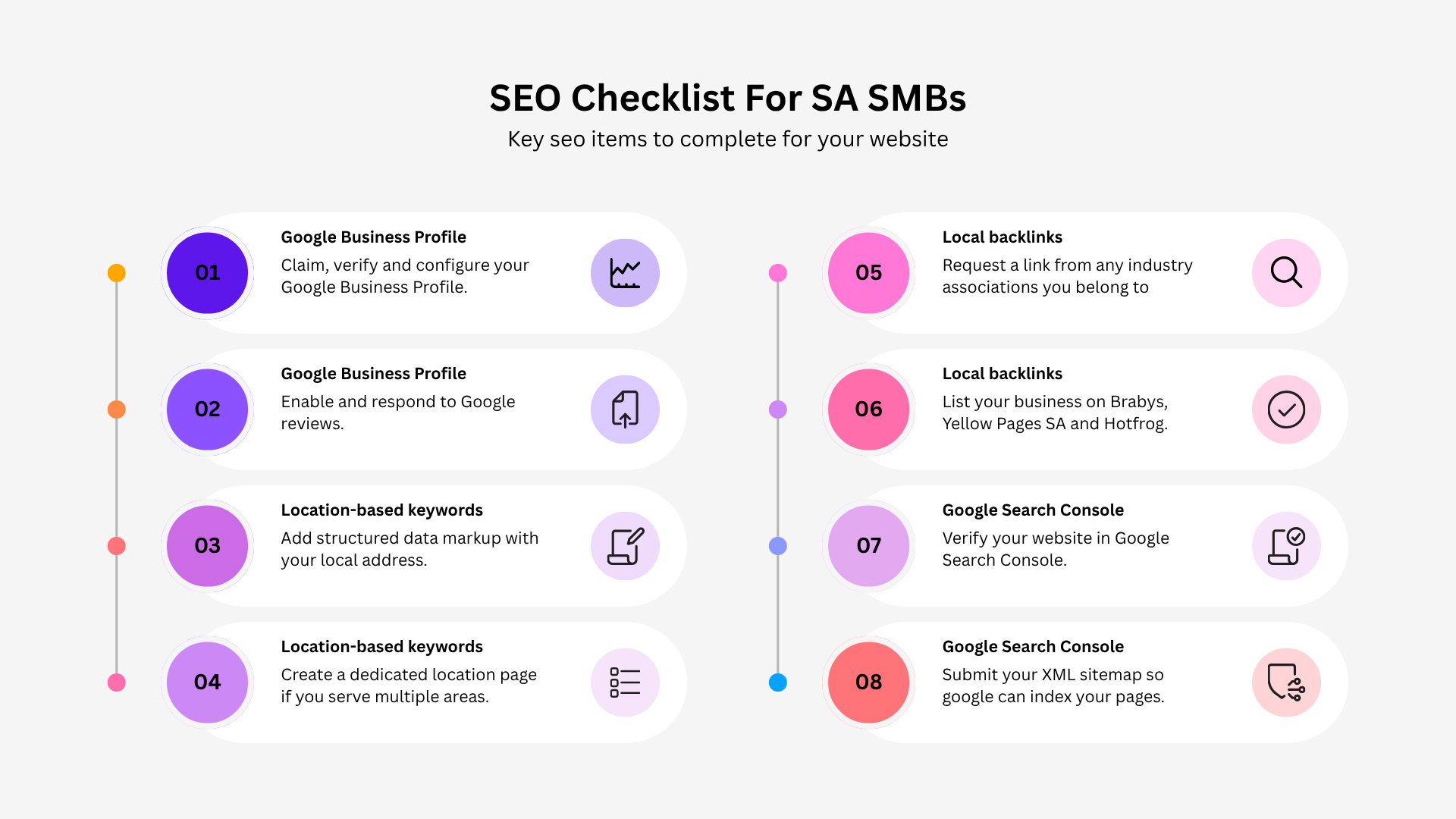
For new sites, the practical approach is to start local: get listed in credible South African business directories, earn a mention from a local industry association, guest post on a relevant blog, or build relationships with complementary businesses that might link to your content. It's slow work, but it compounds over time.
Reason 5: You Haven't Set Up the Basics
This one is surprisingly common. A site launches. It looks great. And nobody sets up Google Search Console, submits a sitemap, verifies the site with Google Analytics, or creates and optimises a Google Business Profile.
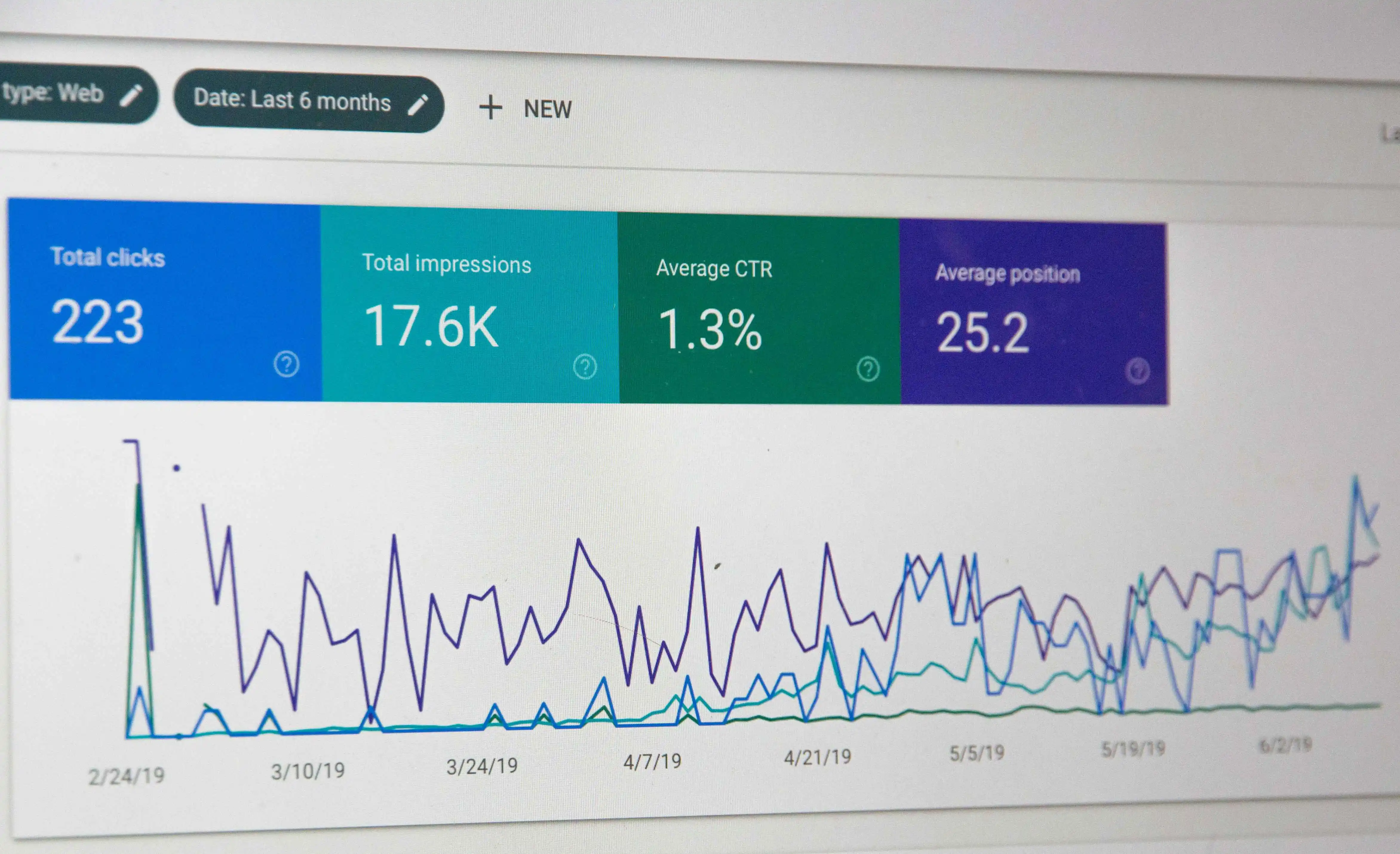
Without Google Search Console, you have no visibility into how Google sees your site, which queries it's appearing for, which pages it has indexed, and whether there are crawl errors preventing pages from appearing at all. Without a sitemap, Google has to discover your pages on its own, which can take weeks or months.
The baseline setup every new website needs:
- Google Search Console connected and sitemap submitted
- Google Analytics installed and verified
- Google Business Profile created and fully optimised
- Meta titles and descriptions written for every key page
- A robots.txt file confirming which pages Google can crawl
None of these are complicated. But they're rarely included in a design handover unless you know to ask.
What Ranking Actually Requires, and How Long It Takes
To rank on Google in South Africa in 2026, a new website needs keyword-informed content, a technically clean structure, decent page speed, local SEO signals, and the beginning of a backlink profile. With all of that in place, industry data suggests a realistic timeline of three to six months before meaningful organic traffic begins to arrive.
Without it, there is no timeline. The site simply stays invisible, regardless of how well it converts the visitors it does receive.
This is worth sitting with. If your website has been live for six months and Google Analytics shows near-zero organic traffic, the problem is almost certainly not a design issue. It's a strategy issue and the sooner it's addressed, the sooner the gap between your site and your competitors starts to close.
Once you do start ranking and traffic begins arriving, the next question becomes whether your site is actually built to convert those visitors. How your site should perform once visitors arrive is a separate conversation, but an equally important one.
So What Should You Do Now?
If you've read this far and recognised your own website in one or more of these sections, here's the honest next step:
Run a basic audit before you do anything else. Google Search Console (free) will show you whether your pages are being indexed and which queries, if any, are surfacing your site. Google PageSpeed Insights (also free) will give you a performance score and a breakdown of what's slowing your site down. These two tools alone will tell you whether you have a technical problem, a content problem, or both.
If the audit reveals deep structural issues, a site built without SEO in mind, slow by design, with thin content across every page, a rebuild may be more efficient than a retrofit. Website design built for search visibility in Cape Town looks different from design built purely for aesthetics, and the difference shows up in your Google rankings within months, not years.
Frequently Asked Questions
Subscribe to Our Newsletter
Get the latest insights on digital marketing delivered to your inbox
We respect your privacy. Unsubscribe at any time.
Resources & References
The following sources were consulted in the preparation of this article.
- 1.https://developers.google.com/search/docs/fundamentals/how-search-works
- 2.https://developers.google.com/search/docs/fundamentals/seo-starter-guide
- 3.https://search.google.com/search-console/about
- 4.https://developers.google.com/speed/pagespeed/insights/
- 5.https://developers.google.com/search/blog/2020/11/timing-for-page-experience
- 6.https://developers.google.com/search/docs/appearance/google-business-profile
- 7.https://moz.com/beginners-guide-to-seo
- 8.https://backlinko.com/google-ranking-factors
- 9.https://ahrefs.com/blog/how-long-does-seo-take/
- 10.https://www.searchenginejournal.com/ranking-factors/
- 11.https://support.google.com/webmasters/answer/7451184
Related Articles

5 Essential Digital Marketing Strategies for South African Small Businesses in 2025
Discover the proven digital marketing strategies helping South African small businesses grow online, attract more customers, and boost sales in 2025.
SEO Basics: Getting Your Cape Town Business Found Online
A practical SEO guide for Cape Town businesses. Learn how to rank higher in search results, attract local customers, and grow your online presence.

The Importance of Professional Website Design for Local Businesses
Discover how a professionally designed website builds trust, boosts SEO, and drives conversions for local South African businesses.