
Is Organic Reach Dead Why SA Brands Need A Paid Social Strategy

You posted something last week that took two hours to put together. It got eleven likes, three of which were from your own staff. Meanwhile your budget has not changed and your reach keeps dropping. You are not imagining it.
This is not an isolated story. It is playing out across Cape Town, across the Western Cape, and across every industry that has invested time and money into organic social media content and is quietly watching the returns diminish. The platforms have changed their priorities. The question is whether your strategy has changed with them.
The honest answer, for most small and medium businesses, is no. And in 2026, that gap between how social media used to work and how it actually works now is costing real money.
What Actually Happened to Organic Reach
The decline did not happen overnight, but it has been consistent and deliberate.
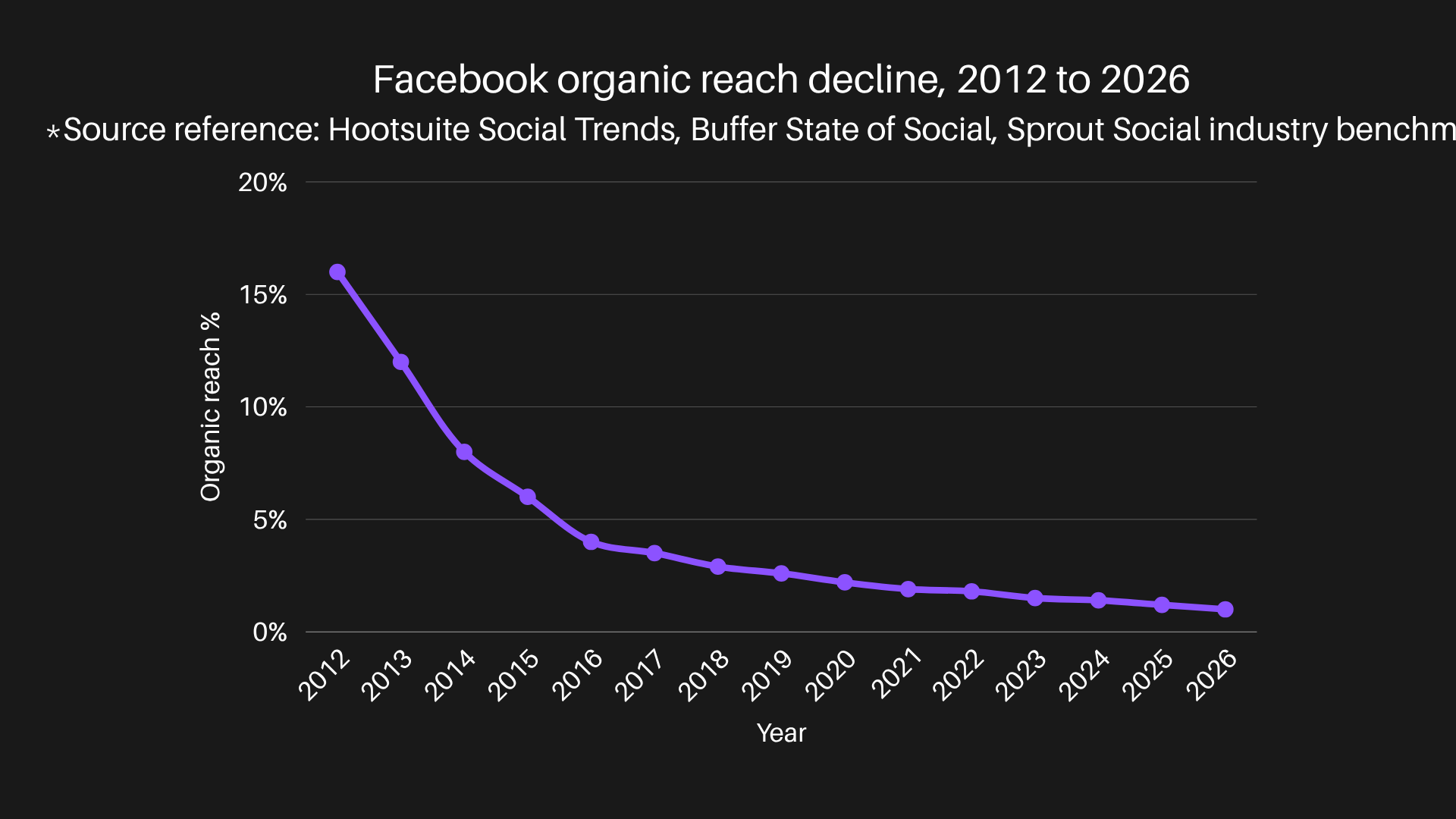
Facebook began restricting organic reach for business pages years ago as it shifted toward a paid advertising model. What once delivered a post to a meaningful portion of your followers now reaches a fraction of them, sometimes in the low single digits as a percentage of your total audience. Instagram followed the same trajectory as Meta tightened its advertising inventory and the platform matured.
Industry data consistently shows that average organic reach on Facebook has declined dramatically over the past decade. For most business accounts, a post now reaches only a small slice of the people who chose to follow that page. Instagram has mirrored this pattern, with reach increasingly determined by engagement velocity in the first few minutes after posting, a game that systematically favours accounts with existing large audiences and consistent posting schedules.
The mechanism is straightforward. These are advertising businesses. Their revenue comes from paid placements. Organic reach is not a feature they are incentivised to protect.
Why this hits Cape Town businesses harder than most
South Africa's social media landscape is heavily mobile-first. People are scrolling on their phones, consuming content quickly, and the platforms know this. Paid placements are designed precisely for this environment, delivering targeted content to specific audiences based on location, behaviour, and interest.
When organic reach was more generous, a well-made post could find its own audience. Today, without paid amplification, even excellent content stays invisible to the people most likely to act on it. For Cape Town businesses operating in competitive local markets, whether hospitality, retail, services, or lifestyle brands, that invisibility has real consequences.
The Difference Between Boosting a Post and Running a Real Campaign
This is where many business owners make their first and most expensive mistake.
Boosting a post feels like paid social. You spend money, you get more views. But boosting is a blunt instrument. It uses limited targeting, optimises for reach rather than outcomes, and does not give you the data infrastructure to improve over time.
A properly structured paid social campaign is a different thing entirely. It starts with a specific objective, whether that is driving website traffic, generating direct enquiries, promoting an event, or building a retargeting audience. It uses custom audience targeting based on location, demographics, interests, and behaviour. It runs multiple variations of creative and copy simultaneously, testing what resonates. And it tracks outcomes, not just impressions.
What a real paid campaign includes:
- A clearly defined campaign objective tied to a business goal
- Custom audience targeting, not just boosted reach to your existing followers
- Multiple ad variations with split testing
- Conversion tracking linked to your website or landing page
- Regular optimisation based on performance data
The result is not just more views. It is more of the right views, from people in Cape Town and the Western Cape who are actually in-market for what you sell.
Before committing budget to any platform, it is worth understanding which platform is right for your business, since paid social strategy on Facebook looks fundamentally different from a TikTok campaign.
Organic Content Is Not Dead, But It Cannot Work Alone
This is an important distinction. Saying organic reach is dead as a reliable growth driver is not the same as saying organic content has no value.
Organic content builds trust. It shows personality. It gives potential customers a reason to follow you before they are ready to buy. When someone sees your paid ad and then visits your profile, your organic content is what convinces them you are legitimate, consistent, and worth engaging with.
The mistake is treating organic content as a distribution channel. It is not, not anymore. It is a credibility layer. Your paid campaigns do the distribution. Your organic posts do the convincing.
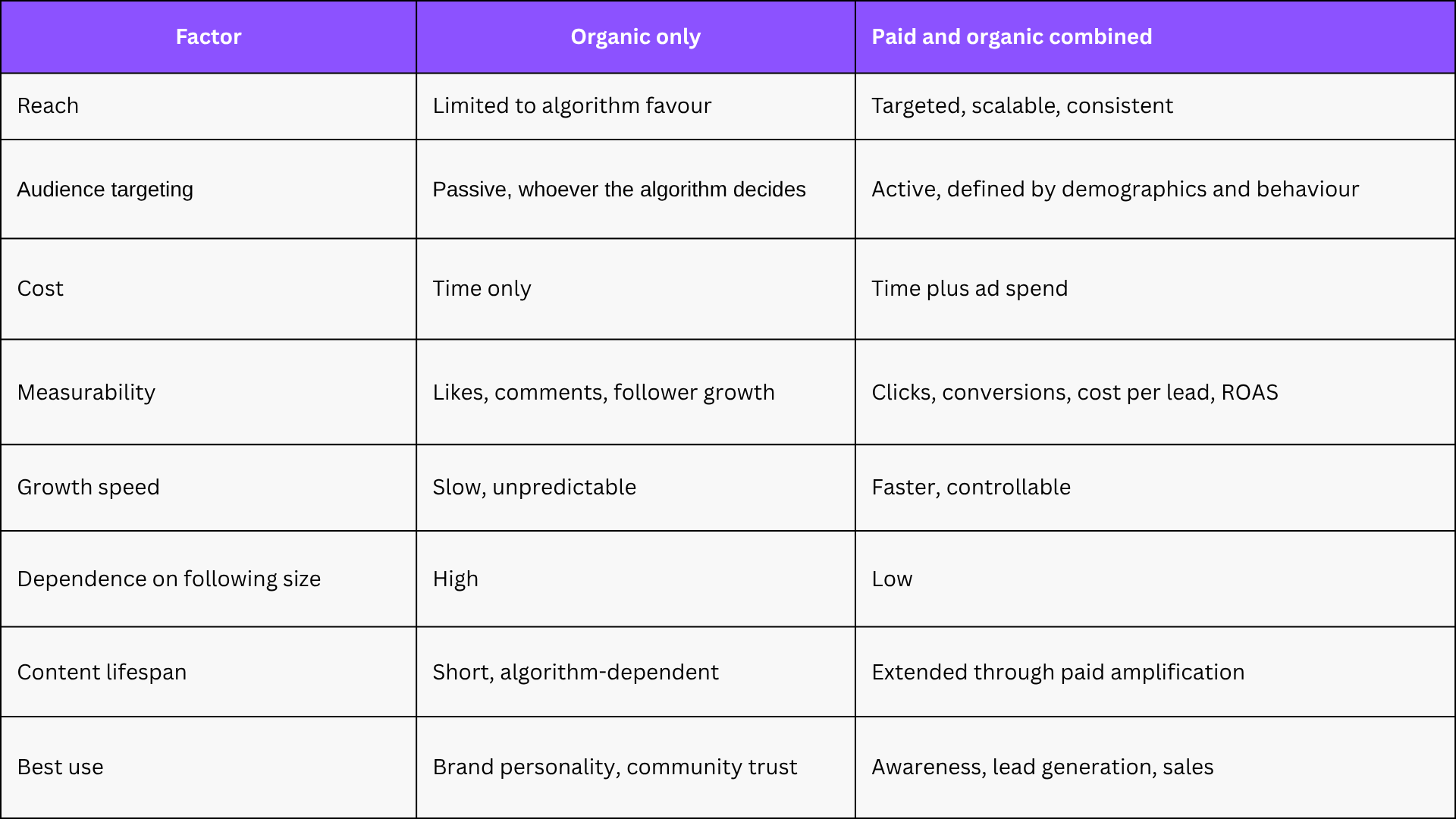
The most effective social media strategy for Western Cape brands in 2026 combines both, with paid social driving awareness and traffic, and organic content converting that attention into trust and eventually transactions.
Research into social media marketing ROI indicates that businesses combining paid and organic strategies significantly outperform those relying on organic content alone. This is not a marginal difference. It is the difference between a social media presence that generates business and one that feels productive without actually producing anything.
How Much Does Paid Social Actually Cost for a Small Business
The question almost every business owner asks, and the answer is more accessible than most expect.
Paid social does not require a large agency budget. A focused campaign with clear targeting and a modest monthly spend can deliver measurable results, particularly when that spend is directed at a specific Cape Town or Western Cape audience rather than cast broadly.
The key variables are your objective and your targeting precision. Broad awareness campaigns cost less per impression but convert less efficiently. Retargeting campaigns, which show ads to people who have already visited your website or engaged with your content, typically deliver the highest conversion rates at lower cost because you are reaching warm audiences.
Starting points worth knowing:
- Define one clear objective before spending anything
- Start with retargeting if you already have website traffic
- Test with a small budget before scaling what works
- Never boost posts without first defining what outcome you are optimising for
- Review performance weekly and cut what is not converting
If you are serious about building a paid social strategy that is actually tied to business outcomes, working with a team that understands the Cape Town market makes a genuine difference. Paid social media management in Cape Town means building campaigns that reflect how local audiences behave online, not recycling generic templates.
The Bigger Picture: Paid Social Is One Part of a Digital Strategy
Paid social amplifies your reach. It does not replace the need for a strong overall digital presence.
A business that runs effective paid campaigns but sends traffic to a weak website, or has no mechanism to capture and follow up with leads, is leaving most of the value on the table. Paid social is the traffic driver. Everything downstream, your website, your email list, your sales process, has to be ready to convert that traffic.
It is also worth being clear that social media, paid or otherwise, is not a substitute for owning your digital presence. Understanding the relationship between social media and your website is fundamental to building a strategy that compounds over time rather than depending entirely on rented platform infrastructure.
That is the shift. Not from organic to paid. From organic alone to organic and paid, working together, each doing what it is actually built to do.
The businesses in Cape Town that understand this in 2026 will not just maintain their social media presence. They will grow it.
Frequently Asked Questions
Subscribe to Our Newsletter
Get the latest insights on digital marketing delivered to your inbox
We respect your privacy. Unsubscribe at any time.
Resources & References
The following sources were consulted in the preparation of this article.
- 1.https://datareportal.com/reports/digital-2024-south-africa
- 2.https://sproutsocial.com/insights/social-media-statistics/
- 3.https://buffer.com/state-of-social
- 4.https://www.hootsuite.com/research/social-trends
- 5.https://napoleoncat.com/stats/social-media-users-in-south-africa
- 6.https://www.statista.com/topics/9922/social-media-in-south-africa/
- 7.https://www.meta.com/en-za/business/
- 8.https://newsroom.fb.com/news/2018/01/news-feed-fyi-bringing-people-closer-together/
Related Articles

5 Essential Digital Marketing Strategies for South African Small Businesses in 2025
Discover the proven digital marketing strategies helping South African small businesses grow online, attract more customers, and boost sales in 2025.
SEO Basics: Getting Your Cape Town Business Found Online
A practical SEO guide for Cape Town businesses. Learn how to rank higher in search results, attract local customers, and grow your online presence.

The Importance of Professional Website Design for Local Businesses
Discover how a professionally designed website builds trust, boosts SEO, and drives conversions for local South African businesses.